Reference scenario · Agentic AI workflow design
A multi-agent workflow that cannot act without a signature
Specialist agents read and propose; a deterministic check and a named human decide; one scoped tool writes, and everything is recorded.
- Example stack
- Agentic workflow · scoped tools
- Scope
- Evaluation, approval, audit
- Output
- Bounded workflow and approval record
A composite reference scenario built from the four offers. It is not a named client engagement; no client names, metrics or outcomes are implied.
01 · The problem
- Agent prototypes usually succeed on the happy path and then meet production requirements they were never designed for. The model can read anything the integration allows, retrieved documents can carry instructions, and a tool that writes is reachable from the same loop that generates suggestions.
- The gap is not model quality. It is that tool access, data boundaries, approval, and rollback were left as prompt instructions rather than enforced by the system.
- Multi-agent designs widen this: more tools, more hops, more places for an unintended action to be plausible. Adding agents adds permission surface before it adds capability.
02 · The architecture
Teams with a working agent prototype that needs a permission model, an evaluation set, and an approval path before it touches real systems. The diagram is the shape of the answer; the text version below it is the same argument in reading order.
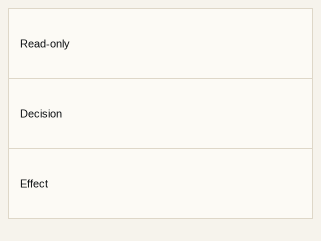
Text version of this figure
- A trigger starts the run; specialist agents read sources scoped to the caller's access, and the evaluation set gates behaviour changes.
- The orchestrator proposes an action using read-only tools, so a wrong proposal costs a review rather than a rollback.
- A deterministic policy check confirms scope, data handling, and reversibility before any human is asked.
- A named reviewer approves with the action, evidence, and reversal in view; rejection returns context to the workflow.
- One write tool with a scoped identity performs the action and appends it to an audit ledger; failures become new evaluation cases.
03 · How the work runs
- Choose one bounded workflowPick a workflow with a trigger, a decision, a handoff, and a definition of done. It should be repetitive, observable, and recoverable when wrong. If it cannot be described without inventing a new organisation, it is not the first one.
- Split reading from actingGive specialist agents read-only tools scoped to the caller's access. Let the orchestrator propose a next step. Move the write behind a separate tool with its own identity only when the evaluation shows the recommendation is reliable and the action is reversible.
- Make the boundary enforceablePut a deterministic check between proposal and action: scope, data classification, rate limits, and reversibility. The check is code, not a prompt, and the tool enforces the permission even when the model asks for something else.
- Design approval as a stepA reviewer sees the proposed action, the evidence behind it, the affected systems, and how to reverse it. Rejection must return useful context. Routine reversible actions can use a lighter tier than irreversible ones.
- Build the evaluation and the runbook togetherAssemble cases from real inputs: common, ambiguous, missing data, conflicting instructions, and cases where the right answer is to escalate. Version prompts, tools, and model choice. Write the kill switch and reconciliation path before the first production case.
04 · The controls
- Data classification decides what may enter context; retrieval honours the caller's source permissions rather than a service account's.
- Each tool has one job, the smallest useful scope, and its own identity; read and write tools are separate even against the same system.
- Irreversible actions need a distinct approval and a second reviewer; routine reversible actions use a lighter tier.
- Memory is scoped to the user or case, inspectable, and deletable; state is reconstructed from systems of record where possible.
- Every action is appended to an audit trail with the version of prompts, tools, and model that produced it.
05 · Trade-offs
| Decision | What you gain | What you give up |
|---|---|---|
| A named human approval before any write | No action lands without a signature, and the reviewer sees the evidence and the reversal before deciding. | Approval adds latency and depends on a person being available; escalation tiers and timeouts have to be designed rather than hoped for. |
| Read-only tools first, write access later | Evidence is produced before consequences. | It is slower to demonstrate value. |
| A single agent before a multi-agent split | Fewer hops, lower cost, and fewer failure modes for the same workflow. | It may contradict the brief, and saying so is part of the work. |
| Build the evaluation set from real cases | A regression is caught by the set when a prompt or model changes, rather than by a user in production. | The cases have to come from the client; without them every improvement is a guess and every regression is found by a user. |
06 · What changes
- A model attempt to exceed its tool scope fails at the tool, not in the prompt.
- Every production action has a reviewer, a record, and a reversal path that has been tested at least once.
- The evaluation set catches a regression when a prompt or model changes, before a user does.
- Cost per case and escalation rate are observable, so the workflow can be tuned rather than argued about.
07 · Out of scope
- Design, prototyping, and evaluation planning, not autonomous production operations.
- Model and vendor selection depend on the client's data, residency, and procurement constraints.
- No completed autonomous deployment or business outcome is claimed or implied.
- Sensitive actions remain behind human approval until the client accepts the risk in writing.
Related
The offer and the writing behind it.
Agentic AI workflow design
The offer this scenario sits inside. Scope, boundaries and the questions worth answering first.
See the offer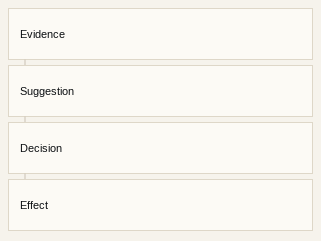
Designing agentic systems with useful boundaries
Agentic AI on Azure becomes easier to engineer when the workflow, tool permissions, and human approval points are designed before the model is asked to act.
12 Nov 2026 · 5 min readAnother use case
A landing zone that answers before it blocks